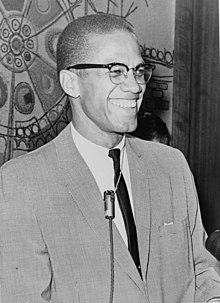
Recently I read a book on the life of Malcolm X. Before I proceed on the lessons learned from the book, I want to make one thing clear:
I am in no way an advocate of all of Malcolm X’s philosophy towards race relations. He was very much for Black Nationalism and separation of blacks and whites in the earlier parts of his public prominence. However, I think this position is understandable given the time he lived in (1925-1965) and the overt racism many blacks experienced at the time. I believe his life is an example of courage and discipline that all Americans can learn from. I also believe that his life is a good example of how our stories evolve over time.
Facing The Bully
In late 1992 the movie Malcolm X was released in theaters. The movie was directed by Spike Lee and featured Denzel Washington in the lead role portraying Malcolm X. Probably a couple years later I saw the movie for the first time on HBO. It’s an amazing film depiction of Malcolm X’s life and activism during the Civil Rights Era. The book I read, Malcolm X: A life of Reinvention by author and historian Manning Marable is a fascinating read and presents Malcolm X as a complex man, utterly committed to seeing society as a whole, express the full humanity of black people.
The book reminds me very much of a scene from the 1992 movie:
After a black man (Johnson Hinton) is severely beaten and taken into custody by police, witnesses appeal to Macolm to do something as the man has been held without medical treatment for his wounds. Malcolm promptly mobilizes The Fruit of Islam (FOI), a platoon sized element of fellow male Nation of Islam Followers (NOI). He goes to the Police Station and demands to see ‘Brother Johnson’. The white police officers who clearly have zero regard for the health of ‘Brother Johnson’, capitulate to Malcolm’s demand when they look outside the precinct and observe the FOI men standing at attention in formation. Upon inspection, Malcolm demands that the victim be rushed to the hospital for treatment. As an ambulance rushes the victim away, Malcolm marches the FOI through the streets to the hospital to ensure he is properly cared for. To this day, this clip is still one of my favorite scenes from a movie. Why?
It’s the context for both myself in the early 90’s watching the movie and the era that the movie takes place in (the 50’s and 60’s). The incident in the film takes place in the late 1950’s in New York City. At that time, police brutality towards blacks for no other reason than skin color was fairly common. Also, I lived in Birmingham, AL at the time of watching the film. When we first moved to Birmingham I was 10 years old (Probably 12 years old when I saw the movie) and I was terrified initially at the possibility of racial violence at the hands of the Ku Klux Klan (KKK). That fear was fueled by the history of racism in Birmingham and The Deep South. The 16th Street Baptist Church where 4 little black girls were killed by a bomb planted by local KKK members in 1963 was only a few minutes drive from the neighborhood I lived in. I drove past it almost daily when I first got my driver’s license. Birmingham had been nick-named during this time as “Bombingham” for the many violent attacks similar to the one at the church propagated by racists towards black people. To see a black man and black men depicted so boldly in the face of obvious racism at a time when overt racism was ubiquitous and often violent, was an incredibly profound act of courage to me. Malcolm X and the FOI were standing up to a bully in the most explicit way in my mind.
Discipline and Courage
To go beyond race and focus on courage and discipline, I was also in the throws of my time in middle school and my battles with bullying and weight loss. Seeing Malcolm’s story of transformation from a street criminal running for his life, to going to jail, to then becoming so amazing a minister and leader that he could command such a group of disciplined men… It spoke to me and encouraged me on my own quest to improve myself and stand up to the bully’s in my own life. The scene gave me hope that someone so fragile as I felt at the time, could become something much stronger and much more formidable. Watching Malcolm’s on screen evolution from drug abuse and running prostitutes, to being a sober and committed husband gave me the belief that one day through continued effort, I could overcome my struggles with junk food and porn. Since that time I’ve always found Malcolm X to be an intriguing figure.
However, my reverence for Malcolm’s positive attributes is balanced by my recognition that he was flawed just like all of us. He was seen as very controversial and as a racist himself, for preaching that white people were devils and that many black civil right leaders were mere pawns in the hand of the white man. For a time as the head National Minister of The Nation of Islam he remained committed to this belief. However, the movie and the book show his evolution in thought and his intellectual honesty when he encounters people of all colors, races, and nationalities, worshiping Allah (Islamic name for ‘God’) in his pilgrimage to the Holy City of Mecca. The movie and book even depict Malcolm X as apologetic and remorseful for his former scorn of all whites.
As much as we as human beings get caught up in trying to be perfect and present ourselves as such, what seems to attract us to people is often some combination of humility and honesty (of course, other things as well). As a national spokesperson and international figure, it would have been easy for Malcolm X to maintain his former ideological position but part of what I saw in his actions in the movie and in the book were both discipline and courage: The discipline to embrace a belief system, it’s precepts, and work to learn and spread it (The Black Muslim Movement of the Time). The courage to push against norms and doctrine as the recognition of both social injustice and religious hypocrisy presented themselves (The Evolution into Orthodox Islam embracing the humanity of whites while still challenging racism in society). Also, discipline and courage because he most certainly knew his life would be endangered for being honest about the hypocrisy of American racism and the hypocrisy in the Nation of Islam at the time.
An American Story
To me, Malcolm X is a great American. His father is brutally murdered when he is young. His mother is left to grieve with the responsibility of several children, and ultimately ends up being placed in a mental institution. He then goes on to engage in odd jobs and petty crime to get by, ultimately ending up in jail where he undergoes a religious conversion and, through religion, finds the faith and courage to boldly and publicly challenge the ills of racism. He endears respect and admiration of people all over the world even as he admits the faults of his initial position as a separatist. That’s an American Story.
To be honest, it’s sometimes hard for me to listen to some of Malcolm’s old interviews and speeches because of the insistence that blacks and whites be separated. However, I get it. In an era where being black meant you couldn’t sit in certain sections of a restaurant or bus. Being black in certain places meant you couldn’t enter through the front door of a store, you had to go to the back. Being black meant that you could be a famous internationally recognized athlete but you would be denied a room at a hotel where whites stayed or denied entry into a business franchise where whites were owners (Joe Lewis and Ford Motor Company). Being black meant that you might be violently assaulted or killed for looking the wrong way at a white person. Had I lived in this era I might have thought white people were devils too, but I didn’t live in this time and I hope for the day when skin color is merely a physical description like height… and the concept of ‘race’ is gone from use in our language.
Final Thoughts
A bold voice, though flawed, courageous enough to call out the bully, the tyrants, and the hypocrisy in society. His evolution is a powerful example of when the story changes. His evolution is a powerful example of taking responsibility for our beliefs.
I’ll say it many times: The hardest thing we do in life is change.
Let alone a change that will cause you to be outcast from your religion which has saved you in many ways and, at that point, had become Malcolm’s life and livelihood. His outspokenness about the evolution of his beliefs (among other things) cast him out of the Nation of Islam. Given the time, he could have pretended that he still believed whites to be devils and no one close to him would have faulted him for it. But he was honest and I believe he meant to give whites the same respect and dignity that he so urgently sought for blacks.
Read the Book. Watch the Movie. The Life of Malcolm X is an American Story and his life is worth studying.
Discover more from Travis Daigle
Subscribe to get the latest posts sent to your email.
 Travis Daigle